Architect of the Abyss: How Sheck Exley Wrote the Rules for Surviving the Unknown

By the time he was 23, Sheck Exley had logged over 1,000 cave dives — more than anyone alive.
By the end of a career spanning 29 years, that number passed 4,000, stretched from the flooded limestone springs of Florida to the deep cenotes of Mexico.
He was the first person to descend below 800 feet on scuba, and ran staged decompression schedules lasting up to 13.5 hours.
None of that is really why cave and technical divers still study him.
Exley's actual legacy isn't the records. It's that he survived long enough, and paid close enough attention, to turn cave diving from a high-fatality gamble into something with actual rules — rules built not on intuition, but on the systematic study of exactly how other divers had died.
The Data-Driven Pioneer
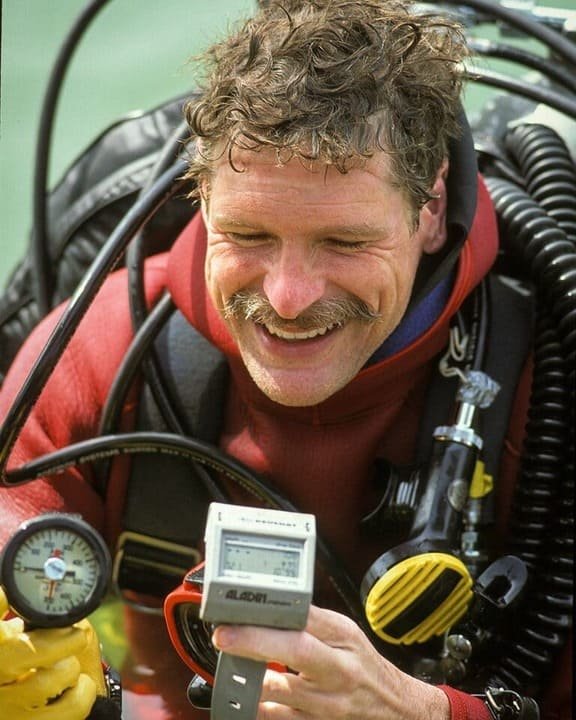
In the 1970s, cave diving was killing people at an alarming rate, and most of the guidance available was folklore — passed diver to diver, rarely examined.
Exley took a different approach, one he later said was inspired by highway patrol accident reports: photographs and case files used not to shock, but to teach, by showing exactly what sequence of small decisions led to a fatal outcome.
He applied the same logic underwater.
Rather than treating each cave diving death as an isolated, unpreventable tragedy, Exley collected and analyzed accident reports as data — looking for the repeating patterns underneath seemingly unrelated fatalities.
That analytical discipline, more than any single piece of gear or protocol, is what separates modern cave diving training from the era that preceded it.
The Genesis of A Blueprint for Survival
That method became a document: Basic Cave Diving: A Blueprint for Survival, published in 1979 through the National Speleological Society's Cave Diving Section.
Its structure was itself the innovation — ten chapters, each built around real accident analysis, covering everything from guideline procedure to panic to equipment failure.
It was one of the first manuals to systemize accident data into an actual safety curriculum, at a point when fatalities in the sport were still disturbingly common.
Several of the concepts it formalized are still the backbone of overhead-environment training today.
The Rule of Thirds
A simple, conservative gas-management framework: a third of your starting gas supply for the way in, a third reserved to get back out, and a third held in reserve for an emergency — yours or a teammate's.
It sounds obvious in hindsight. At the time, it replaced a lot of guesswork with a hard, teachable number.
Continuous Guidelines
A physical, unbroken line back to open water, laid and followed without exception.
Exley's accident analysis kept turning up the same failure mode — divers disoriented in zero visibility, unable to find their way out — and the continuous guideline was the direct, structural answer to it.
Redundancy
Independent backup air and independent backup light, as standard practice rather than optional extras.
Exley is widely credited with helping popularize the "octopus" — a redundant second regulator — specifically for out-of-gas emergencies in an overhead environment, where surfacing simply isn't an option.
Pushing the Outer Envelope: Deep Air and Mixed Gas
Exley didn't stop at cave protocol.
He spent much of his later career at the edge of what the human body could tolerate at depth — deep air diving, then mixed gas, chasing an understanding of nitrogen narcosis and high-pressure nervous syndrome (HPNS) that mostly didn't exist yet.
Divers who worked with him described a resistance to narcosis that was itself unusual, paired with a meticulousness about staged decompression that let him run schedules stretching past 13 hours without classic decompression sickness.
He wrote about this side of diving with the same clear-eyed framework he brought to cave accidents.
A concept now known as Exley's Razor captures it: you never really know your limit until you find it, and once you've exceeded it, there isn't always a way back.
His advice was to plan for the worst realistic scenario rather than the likely one, and to be honest with yourself about how much of any decision to push further was really about ego.
Exley died on April 6, 1994, at Zacatón, a 1,080-foot cenote in Mexico, while attempting a depth record. His dive computer registered a maximum of 906 feet.
The cause was never conclusively determined, though it's generally believed to involve some combination of HPNS and nitrogen narcosis at a depth few divers, before or since, have ever reached.
Even that outcome became part of the field's ongoing accident-data tradition he'd spent his life building — Zacatón and dives like it pushed the sport further toward helium-based mixed gas and away from deep air, exactly the kind of shift his own methodology would have demanded.
Literary and Historical Legacy
Alongside Basic Cave Diving, Exley wrote Caverns Measureless to Man, published the same year he died — part memoir, part record of the exploration that defined his life.
He'd been the first chairman of the NSS Cave Diving Section from 1974, and his international influence extended well past the U.S. cave diving scene — including his collaboration with fellow pioneer Tom Mount, later formally recognized for their combined impact on international underwater cave exploration.
The rule of thirds, the continuous guideline, redundant gas and light — these are so embedded in overhead-environment training today that it's easy to forget they were ever anything other than obvious.
They weren't. They came from one diver's insistence on reading every accident report available and refusing to let a death go unstudied, in a sport that, before him, mostly just absorbed its losses in silence.
Continuing the Legacy
Exley's framework didn't stay frozen in 1979 — it kept getting tested, refined, and carried forward by divers willing to work at the same edge he did.
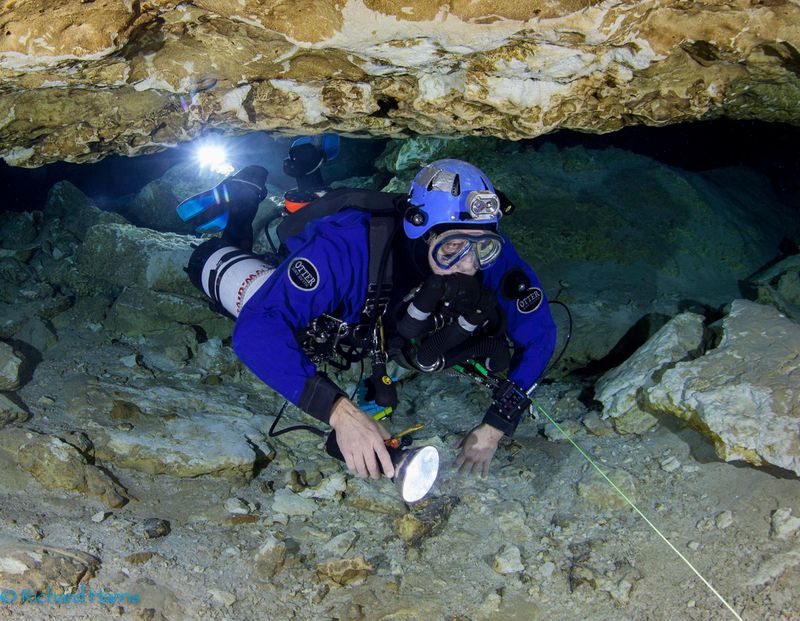
In 2018, Australian anaesthetist and cave diver Dr. Richard Harris put Exley's kind of discipline to its highest-stakes possible test: the Tham Luang cave rescue in Thailand, where a junior football team was trapped deep inside a flooded cave system.
Harris's rare combination — a working cave diver who was also a physician — let him make a call almost no one else on Earth was qualified to make: sedating each boy for the dive out.
He and dive partner Craig Challen were named joint 2019 Australian of the Year for it.
Alongside him, hyperbaric medicine specialist Professor Simon Mitchell of the University of Auckland helped work out the medical protocol that made it survivable, later publishing the first full clinical account of how the rescue was actually managed underwater.
Between them, Harris and Mitchell represent Exley's method taken to its logical extreme: treating an active, live emergency with the same rigorous, physiology-first analysis Exley once reserved for reading accident reports after the fact.
Back in the cave exploration world Exley came from, that same disciplined approach shows up as ongoing frontier-pushing rather than crisis response.
Mike Young — inventor of the KISS Sidekick and Sidewinder rebreathers, and a member of the U.S. Deep Caving Team — has led expeditions that mapped a 23-kilometre underground river system in Puerto Rico (the longest known in the world) and pushed Missouri's Roaring River cave system past 472 feet, the deepest known cave in the United States.
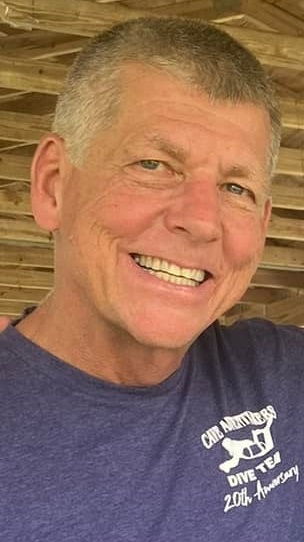
Young has also stepped directly into Exley's other legacy — rescue — working alongside Edd Sorenson, founder of Cave Adventurers in Florida, to pull a lost diver out of a Tennessee cave system after more than 24 hours trapped, in a rescue that took the pair just 45 minutes once they reached him.
Sorenson has multiple such rescues to his name, and in 2012 became the first-ever recipient of the Divers Alert Network Hero Award for it.
None of that happens without the tradition Exley built: continuous guidelines to navigate zero visibility, redundant gas and light to survive equipment failure, and a habit of studying exactly what goes wrong instead of hoping it won't.
Every diver who goes home from one of these dives is, in some small way, still following the blueprint.

Nick is a cave and technical diver — he built to help fellow tec divers find the right instructors, centres, and tools.

